
B.R. Hills Arabica, Peaberry, Washed
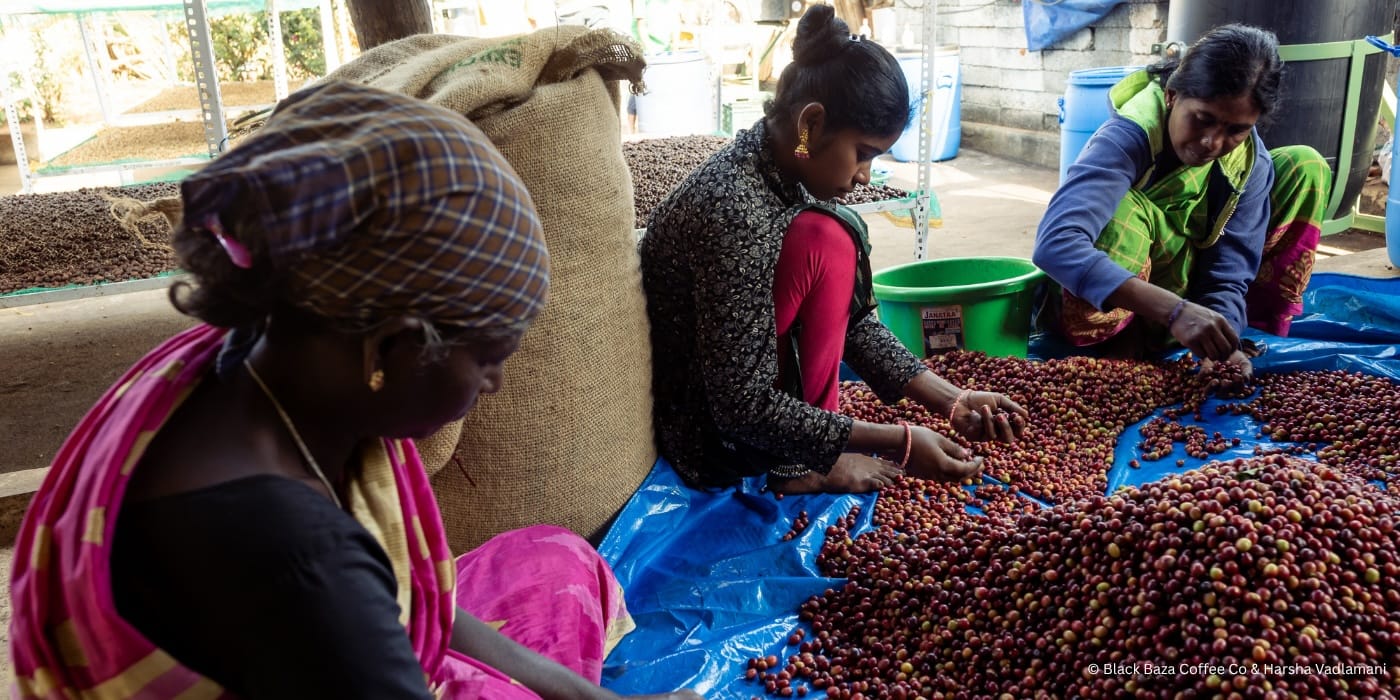
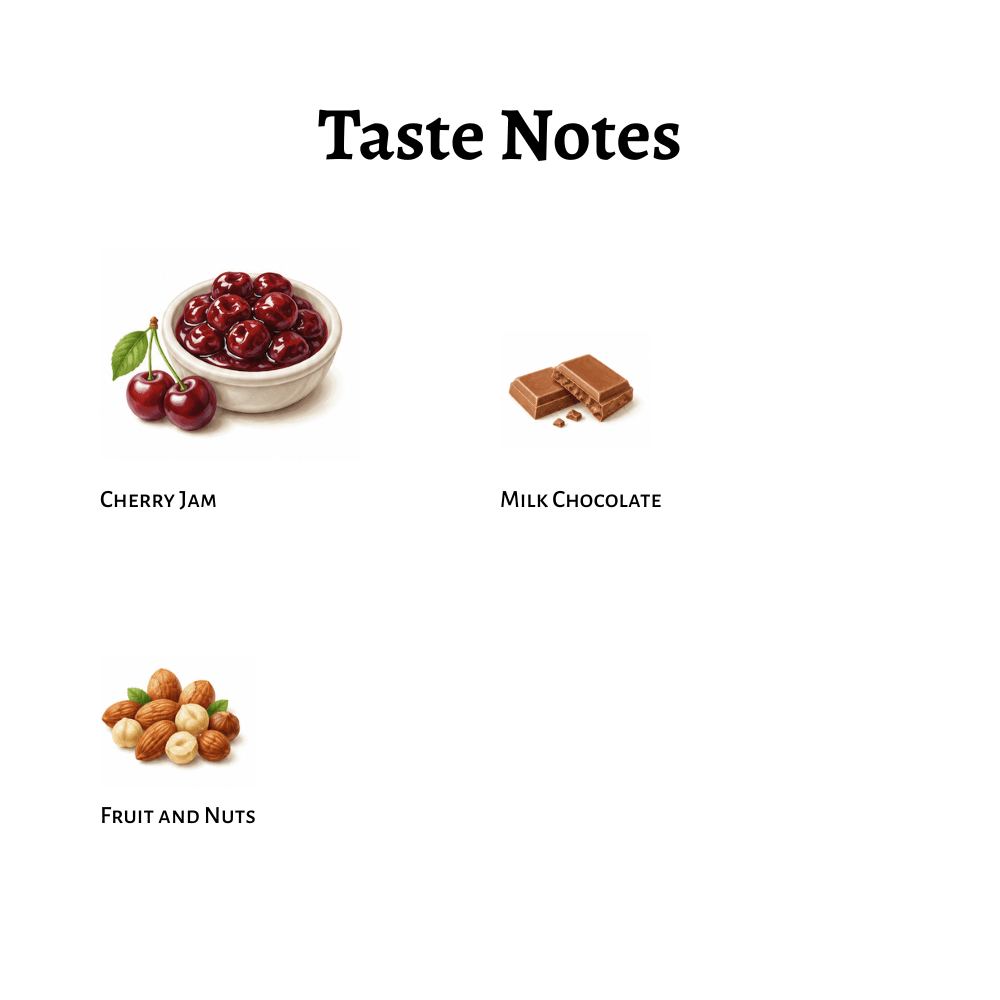
B.R. Hills, Arabica, Peaberry, Washed is an SLN9 varietal grown at 1,000 to 1,200 metres in the moist deciduous forests of B.R. Hills, Karnataka, within one of South India’s most biodiverse coffee growing regions. Peaberry is a rare mutation where a single round bean forms inside the cherry instead of the usual two flat-sided beans, hand-sorted and carefully graded to isolate this bean from the rest of the harvest. The medium roast lot offers a rich cup with notes of cherry jam, milk chocolate, and fruits and nuts.
This coffee is sourced through our partnership with Black Baza Coffee, a direct trade company working with smallholder growers across the Western Ghats and Nilgiris.
Origin
B.R. Hills, Chamarajanagar, Karnataka
Process
Washed - Peaberry
Variety
Arabica (SLN9)
Elevation
1,000 - 1,200 MASL
Cup Profile
Cherry Jam, Milk chocolate, Fruits & Nuts
Ready to source this coffee?
Have questions first? Get in touch

Flavor Journey
Roast approach
Medium roast is how this lot is roasted, chosen to bring out the cherry jam sweetness and milk chocolate depth without losing the nutty character underneath. Peaberry is notoriously difficult to roast well. Its rounded shape behaves differently in the roaster than standard flat beans, and heat transfer that isn’t adjusted for this can easily produce an uneven or underdeveloped cup. The dense texture that makes peaberry distinctive is exactly what makes it demanding to work with this is not a lot to roast on autopilot.
Getting it right rewards patience: a slightly extended development time lets the cherry jam and chocolate notes build fully without tipping into heaviness, while rushing the roast leaves the density unresolved and the cup flatter than the bean’s potential. Roasters who take the time to adjust for peaberry’s behavior are rewarded with a texture and sweetness standard grade beans don’t offer.
Moka pot is the recommended brewing method for this lot. Using a 1:8 coffee-to-water ratio, finely ground coffee, and warm water, brewed over medium heat until a gurgling sound signals it’s ready, produces a concentrated, full-bodied cup that highlights the dense sweetness and chocolate depth this grade delivers particularly well.
Why Roasters Choose This Coffee
B.R. Hills, Arabica, Peaberry, Washed comes from Karnataka’s B.R. Hills, grown at 1,000 to 1,200 metres in the moist deciduous forest that forms part of the wider Western Ghats biodiversity corridor. What sets this coffee apart is grade: a natural peaberry of the SLN9 varietal, hand-picked and carefully sorted to separate naturally occurring round mutations from the standard flat beans in the same harvest.
Roasters value peaberry lots specifically for the density and concentration they deliver, even knowing the grade is harder to roast consistently than standard beans. Because a single round bean forms inside the cherry instead of the usual two, peaberry beans carry more sugar and flavor compound density, producing a richer, sweeter cup than standard grade beans from the same trees. The natural cherry jam and milk chocolate character in this lot reads cleanly at medium roast, in a cup with a full body that holds up well in concentrated brew methods like moka pot.
This lot is sourced through a direct trade relationship with named smallholder growers rather than commodity trading channels, keeping the coffee traceable back to a specific community. Full detail on the current sourcing partner and the growers behind this lot is below.
Why Roasters Choose B.R. Hills, Arabica, Peaberry, Washed:
- A genuine peaberry grade, offering density and sweetness standard grade beans cannot match
- Grown at 1,000 metres in B.R. Hills, contributing to a structured, complex cup
- Sourced through a direct trade relationship rather than commodity channels
- A dense, full-bodied cup that performs especially well in concentrated brew methods
Behind the Cup
Tiger Beetle is the name Black Baza Coffee Co. gives to this lot in their own catalog. Founded in 2016 by Arshiya Bose, Black Baza Coffee is a Bangalore-based direct trade company working with smallholder producers across four regions of the Western Ghats and Nilgiris: B.R. Hills, Palani Hills, the Nilgiris, and Wayanad.
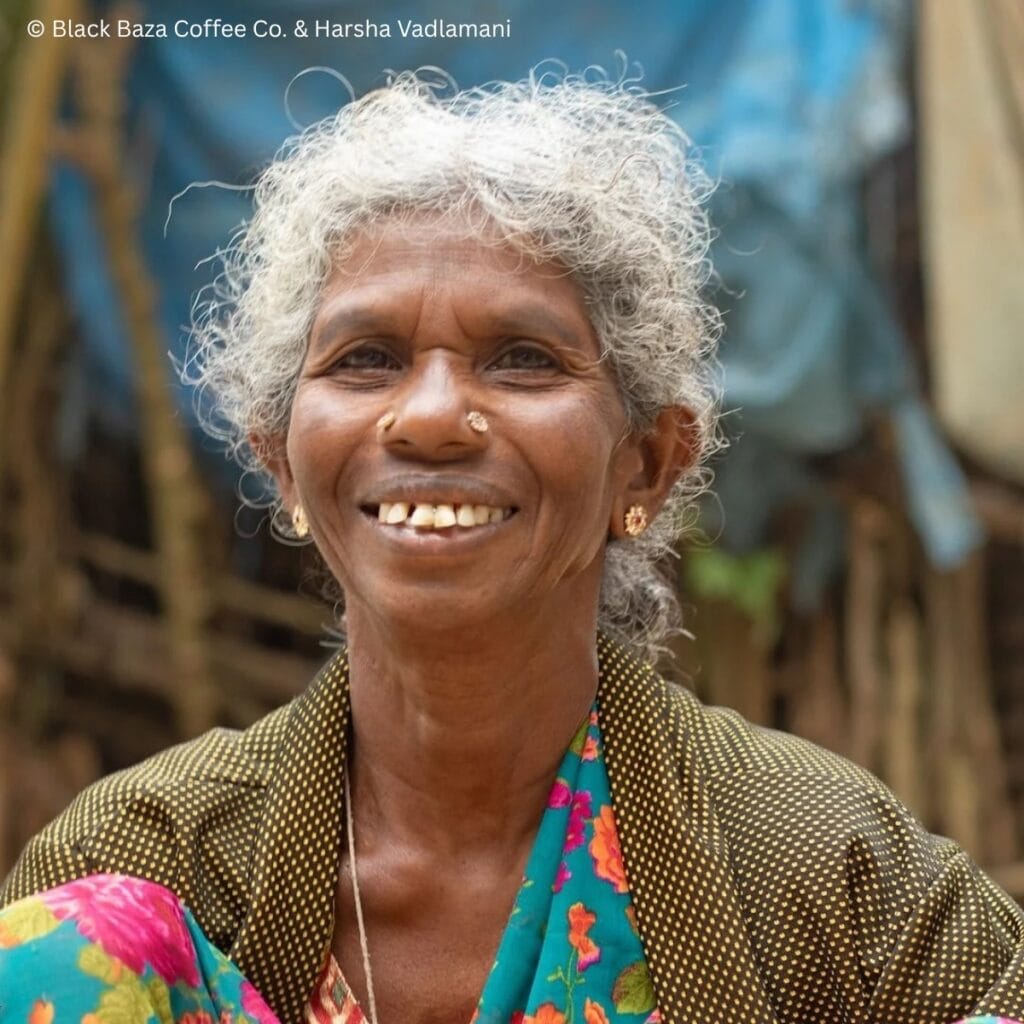
Rangamma is one of the growers behind this lot, from the Soliga community in B.R. Hills. The Soliga are an indigenous community with centuries of ecological knowledge, farming coffee under native forest canopy alongside the biodiversity of the BRT Wildlife Sanctuary.
In 2026, Black Baza Coffee paid Rangamma 1,000 rupees per kilo for this coffee, a price set by Black Baza’s own pricing structure, which pays on quality and biodiversity practice rather than commodity market rates. Black Baza Coffee received the SCA 2025 Sustainability Award, recognition of its work across the value chain.
The name Tiger Beetle comes from one of the fastest running insects in the world, one of several coffees Black Baza has named after species native to the forests its growers farm alongside.
India Coffee Company sources this coffee through our partnership with Black Baza, making this B.R. Hills lot known to Black Baza Coffee as Tiger Beetle available to North American specialty roasters.
Key facts:
- Sourcing partner: Black Baza Coffee, founded 2016, Bangalore
- Growers: Soliga community, B.R. Hills, including Rangamma
- Price paid (2026): ₹1,000/kg
- Recognition: SCA 2025 Sustainability Award
- Trade model: Transparently traded
Ready to source this coffee?
Have questions first? Get in touch
About BR Hills Arabica, Peaberry, Washed Coffee Lot
B.R. Hills sits at the meeting point of the Western and Eastern Ghats, a landscape of moist deciduous forest that supports one of South India’s most biodiverse coffee growing regions. Coffee here grows under native tree cover, sharing the landscape with wildlife rather than displacing it, a growing model that depends on farmers maintaining forest structure rather than clearing it for higher yields. Elevations in this part of B.R. Hills sit between 1,000 and 1,200 metres, cool enough to slow cherry maturation and build the density that gives peaberry grade its concentration.
Peaberry is a naturally occurring variation in coffee cherry development. Rather than the two flat-sided beans that typically form inside a cherry, a peaberry cherry produces a single, small, round bean instead. This happens in only a small percentage of any harvest, which is why peaberry lots are separated out during sorting and grading. The rounded shape means the bean dries more evenly, and the density that comes from its smaller size makes peaberry a genuinely demanding grade to roast well.
Coffee in B.R. Hills is grown almost entirely as an understorey crop, planted beneath multiple canopy layers of native trees rather than in open sun. This shade structure moderates temperature swings, slows cherry ripening, and adds leaf litter that builds organic matter in the soil — all factors that contribute to the density and complexity found in this lot’s cup.
Agronomy and growing conditions:
- Forest type: Moist deciduous
- Elevation: 1,000–1,200 MASL
- Region: B.R. Hills, Karnataka
- Growers: Soliga community, B.R. Hills
This coffee is part of India Coffee Company's Black Baza Coffee sourcing programme, which also includes:
B.R. Hills Arabica, Honey Process
- Arabica (SLN9)
- Honey Process, Pulp Sun-dried
- 1,000 - 1,200 MASL
- B.R. Hills, Karnataka
- Jaggery, Dried Cherry
B.R. Hills Arabica, Washed
- Arabica (Chandragiri)
- Washed
- 1,000 - 1,200 MASL
- B.R. Hills, Karnataka
- Dark Chocolate, Brown Sugar
Wayanad Robusta, Natural
- Robusta
- Natural, Sun-dried
- 700 - 900 MASL
- Wayanad, Kerala
- Dark Chocolate, Tobacco, Spice
Palani Hills Arabica, Washed
- Arabica (Mixed )
- Washed
- 1,100 - 1,300 MASL
- Palani Hills, Tamil Nadu
- Burnt Caramel, Toasted Nuts, Cocoa