
Black Baza Coffee
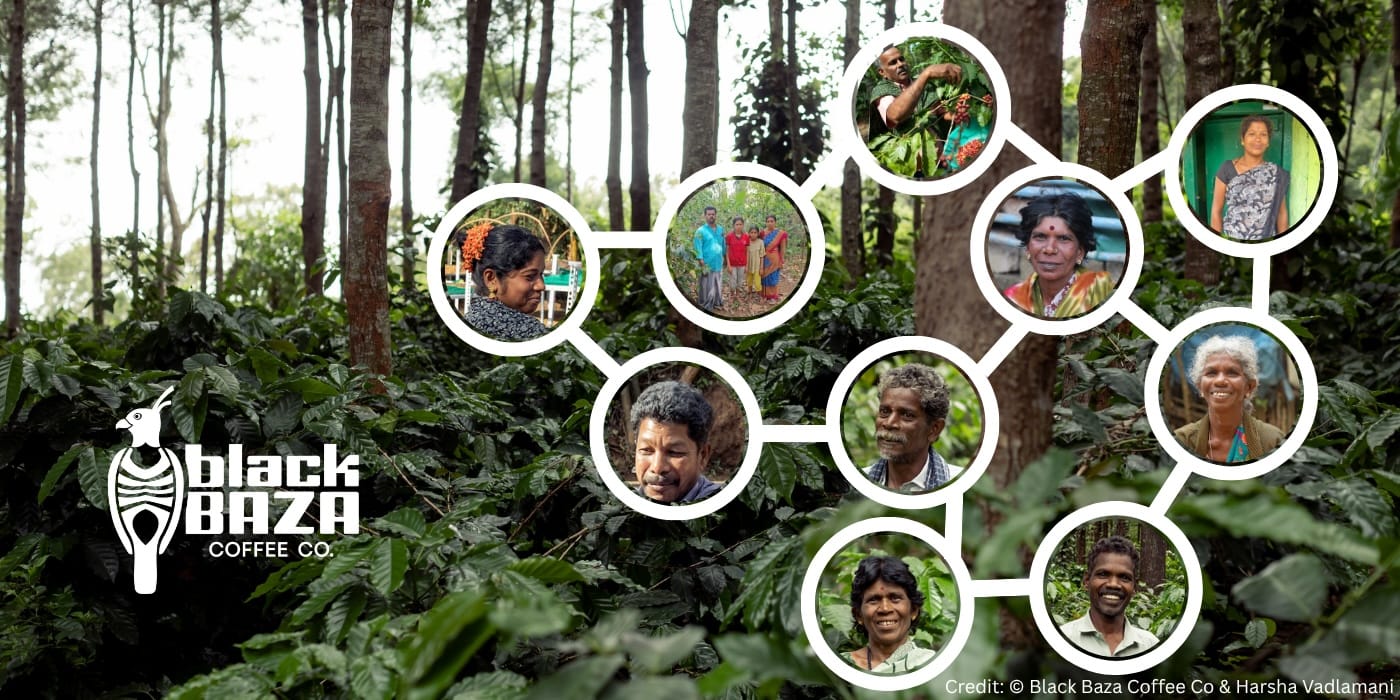
Deep in the Western Ghats of India, one of the world’s most significant biodiversity hotspots, growers in BR Hills, Palani Hills, the Nilgiris, and Wayanad are rethinking what coffee farming can look like.
Black Baza Coffee works directly with these smallholder and indigenous producers, building relationships built on fair pricing, transparency, and long term trust rather than commodity trading through middlemen. Founded in Bangalore in 2016, the company has grown from a handful of partner farms into a model recognized industry wide for its approach to sustainability, biodiversity, and grower livelihoods alike, coffee that carries a story worth telling.
Regions
B.R. Hills, Palani Hills, Nilgiris, Wayanad
Crop
Arabica & Robusta
Model
Direct Trade, Smallholder Sourcing
Impact
Biodiversity & Livelihoods
About Black Baza Coffee
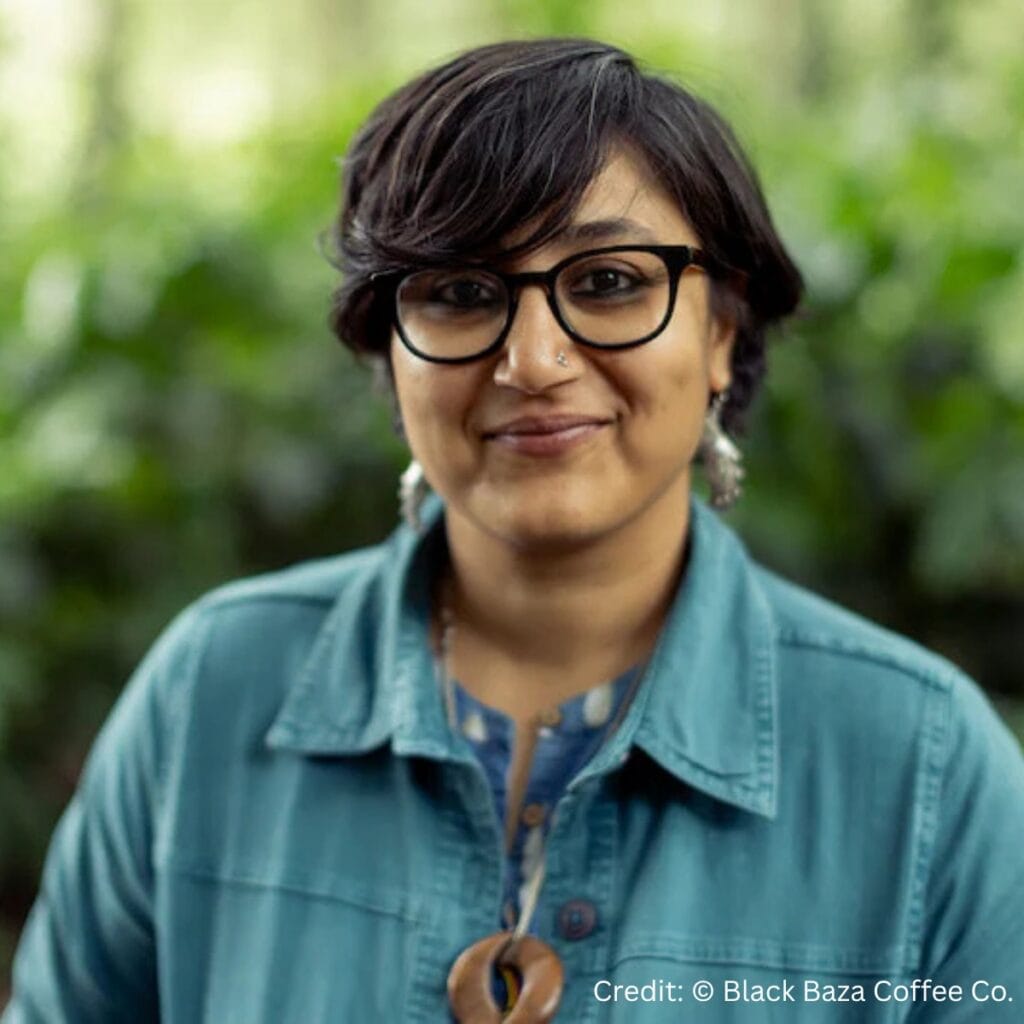
Black Baza Coffee was founded in 2016 by Dr. Arshiya Bose, beginning with 100 kilos of coffee sourced from four farms in Kodagu (Coorg). That start has since grown into direct partnerships spanning B.R. Hills, Palani Hills, the Nilgiris, and Wayanad. In 2025, the company received the Specialty Coffee Association’s Sustainability Award, recognizing its work across the coffee value chain.
Arshiya’s academic background shaped the company’s direction from the start. She holds a PhD in Geography from the University of Cambridge and completed a postdoctoral fellowship at ETH Zurich, where her research explored market incentives for conserving biodiversity, using coffee sustainability certifications as the specific case for that work. She is an Acumen Fellow, a National Geographic Explorer, and Associate Director of Kinship Conservation Fellows. She also holds CQI certification as a Post Harvest Processing Professional (Level II) and works as a CQI Lecturer in Post Harvest Processing, credentials that translate directly into the standards Black Baza applies with growers on the ground.
Today, the company partners with growers across four regions of the Western Ghats and Nilgiris, offering training in regenerative farming and post harvest processing alongside consistent, guaranteed pricing for every harvest. While certified Fair Trade, that commitment includes paying smallholder growers between 1.2 and 1.4 times the prevailing market rate, along with guaranteed buy backs that reduce the price uncertainty many smallholder farmers otherwise face season to season.
The Reason Behind Black Baza Coffee
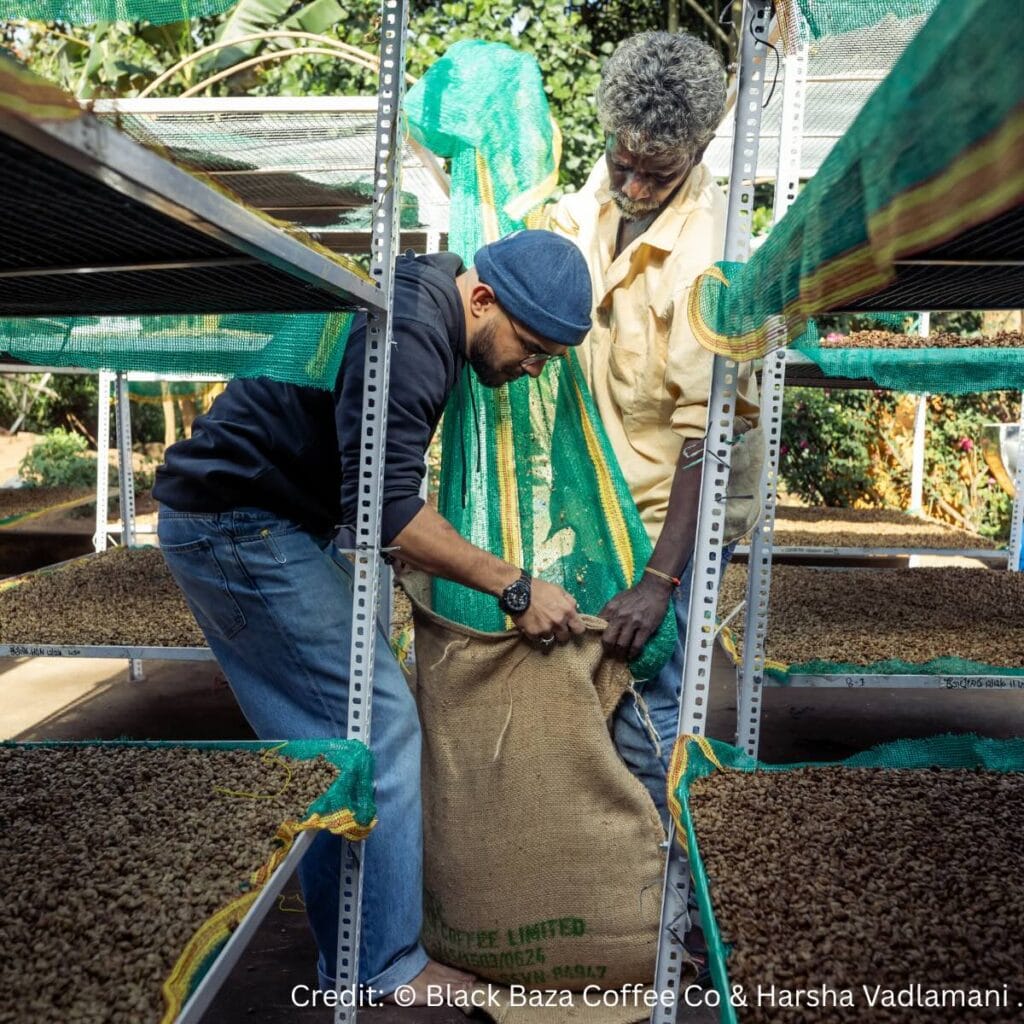
Beyond paying above Fair Trade minimums, Black Baza invests directly in the infrastructure smallholder growers need to produce better coffee. This includes building raised drying beds and pulping stations on partner farms, equipment that meaningfully improves post harvest quality but that sits well beyond most individual smallholders’ own budgets.
Farming principles are co-created with growers themselves, grounded in participatory ecological surveys and long-term research rather than imposed from outside. Biodiversity monitoring centers on specific indicators, including bee populations, earthworm activity, and the presence of native tree species, giving both growers and Black Baza a concrete way to track whether farming practices are genuinely protecting the ecosystem around the coffee.
This same participatory approach extends to processing itself. Through the Microlots programme, producers experiment with slow fermentation and extended drying methods, building unique flavor profiles while earning well above standard market rates for their work. From 2025 onward, this processing work is overseen by certified Q Post-Harvest Processing Professionals, adding a further layer of quality assurance across every partner region.
The Growers
Black Baza’s coffee is shaped as much by the people who grow it as by the land itself. In B.R. Hills, M. Kethegowda, a Soliga elder, has spent over two decades studying the bees, birds, and native trees that share his land with his coffee, work that led him to non-chemical pest trials on his own farm. Alongside fellow grower M. Sannarangegowda, he co-founded Kaadina Makkalu, a community YouTube channel sharing indigenous forest stories, made by the community for its own youth.
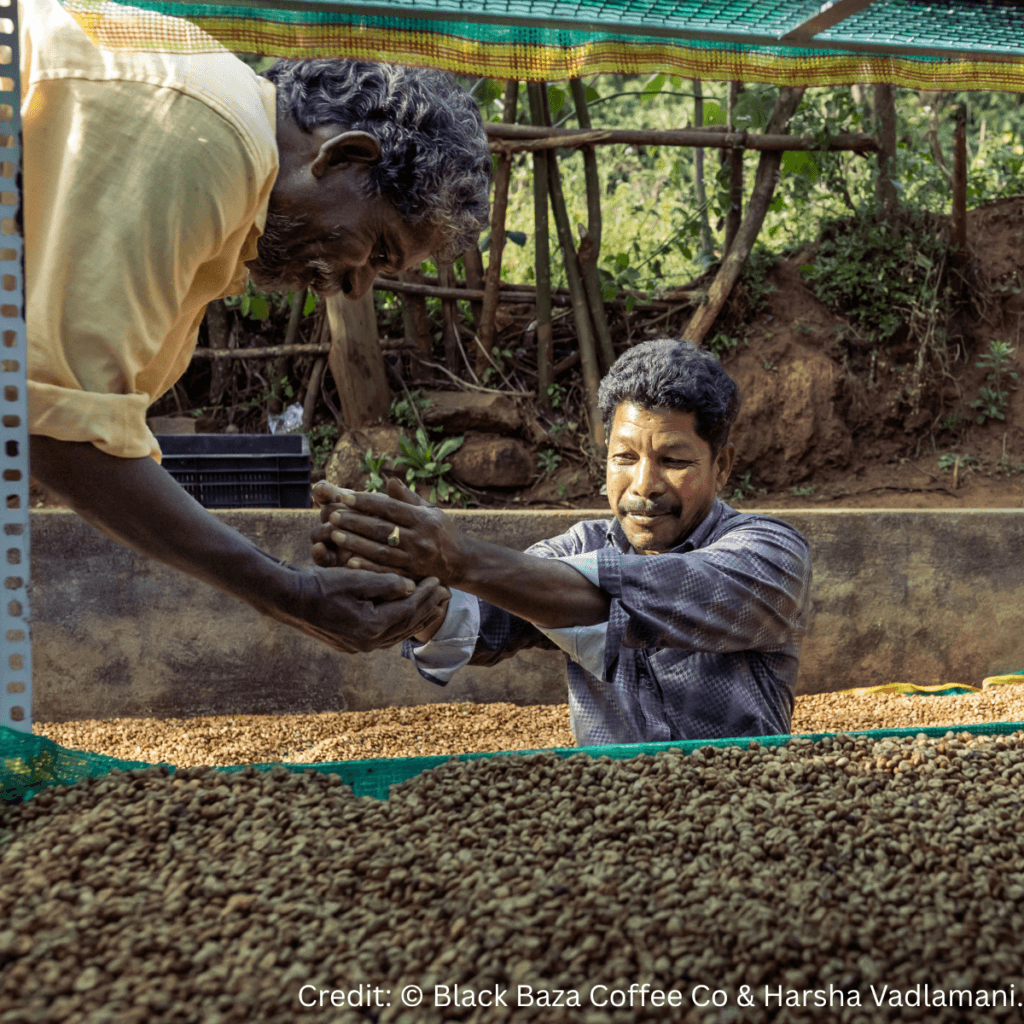
Kempamma is the only woman in her hamlet creating microlots, small batches that have helped clear her family’s debts. Chikkanna’s farm is dense with forest cover, home to giant squirrels, and he has taken eagerly to unusual fermentation techniques. Seen in the picture here, Kethegowda and Kollegowda have worked alongside Black Baza for many years, their knowledge, curiosity, and willingness to experiment continuing to shape the coffees themselves. Chikkathayi, one of the youngest partners, now leads post harvest operations as Assistant Manager at the PICO unit.
A small core team, Suri Venkatachalam, Radha Rangarajan, Bhaskar V, Kavya H, and Asjad Ahmed, carries this work from farm to cup.
Image: Kethegowda and Kollegowda together
In Their Own Words
“Before partnering with Black Baza, we would receive almost half the market price for our produce, Now, I can look forward to the harvest.” Madamma, B.R. Hills
“I always knew conserving biodiversity was important, but we constantly faced pressures to remove shade trees and forest cover and use pesticides,” Dasegowda, B.R. Hills
Why Roasters Choose Coffee from Black Baza Coffee
For roasters building a program around traceability and direct relationships rather than commodity sourcing, Black Baza offers access to four distinct growing regions, B.R. Hills, Palani Hills, the Nilgiris, and Wayanad, through a single sourcing relationship. Each region carries its own soil, elevation, and forest character, differences that show up clearly in the cup, without requiring a roaster to manage separate relationships across four different parts of the country.
Every lot carries traceability back to the specific grower or producer collective behind it, not just a regional label. Processing is now overseen by Asjad Ahmed, a certified Q Grader and Q Post Harvest Processing Professional, adding a layer of quality control that many smallholder sourcing relationships simply lack. The 2025 Specialty Coffee Association Sustainability Award gives buyers an independent, third party signal behind that work, recognition earned rather than claimed.
Beyond the cup itself, sourcing through Black Baza means supporting a model built around guaranteed pricing, transparent trade, and biodiversity monitoring that growers themselves help define and track. For roasters who want their sourcing decisions to reflect those values without building direct farmer relationships from scratch in each region, Black Baza offers a single, accountable entry point into some of India’s most ecologically distinct coffee growing landscapes.
The coffees sourced through Black Baza Coffee's direct trade network currently include
B.R. Hills Arabica, Honey Process
- Arabica (SLN9)
- Honey Process, Pulp Sun-dried
- 1,00 - 1,200 MASL
- B.R. Hills, Karnataka
- Jaggery, Dried Cherry
B.R. Hills Arabica, Washed
- Arabica (Chandragiri)
- Washed
- 1,000 - 1,200 MASL
- B.R. Hills, Karnataka
- Dark Chocolate, Brown Sugar
Wayanad Robusta, Natural
- Robusta
- Natural, sun-dried
- 700 - 900 MASL
- Wayanad, Kerala
- Dark Chocolate, Tobacco, Spice
Palani Hills Arabica, Washed
- Arabica (Chandragiri, Sarchimor )
- Fully washed
- 1,100 - 1,300 MASL
- Palani Hills, Tamilnadu
- Burnt Caramel, Toasted Nuts, Cocoa
B.R. Hills Arabica, Peaberry, Washed
- Arabica (Chandragiri)
- Washed - Peaberry
- 1,000 - 1,200 MASL
- B.R. Hills, Karnataka
- Cherry, Milk Chocolate, Fruits & Nuts
Ready to source coffee from India Coffee Company?
Have questions first? Get in touch